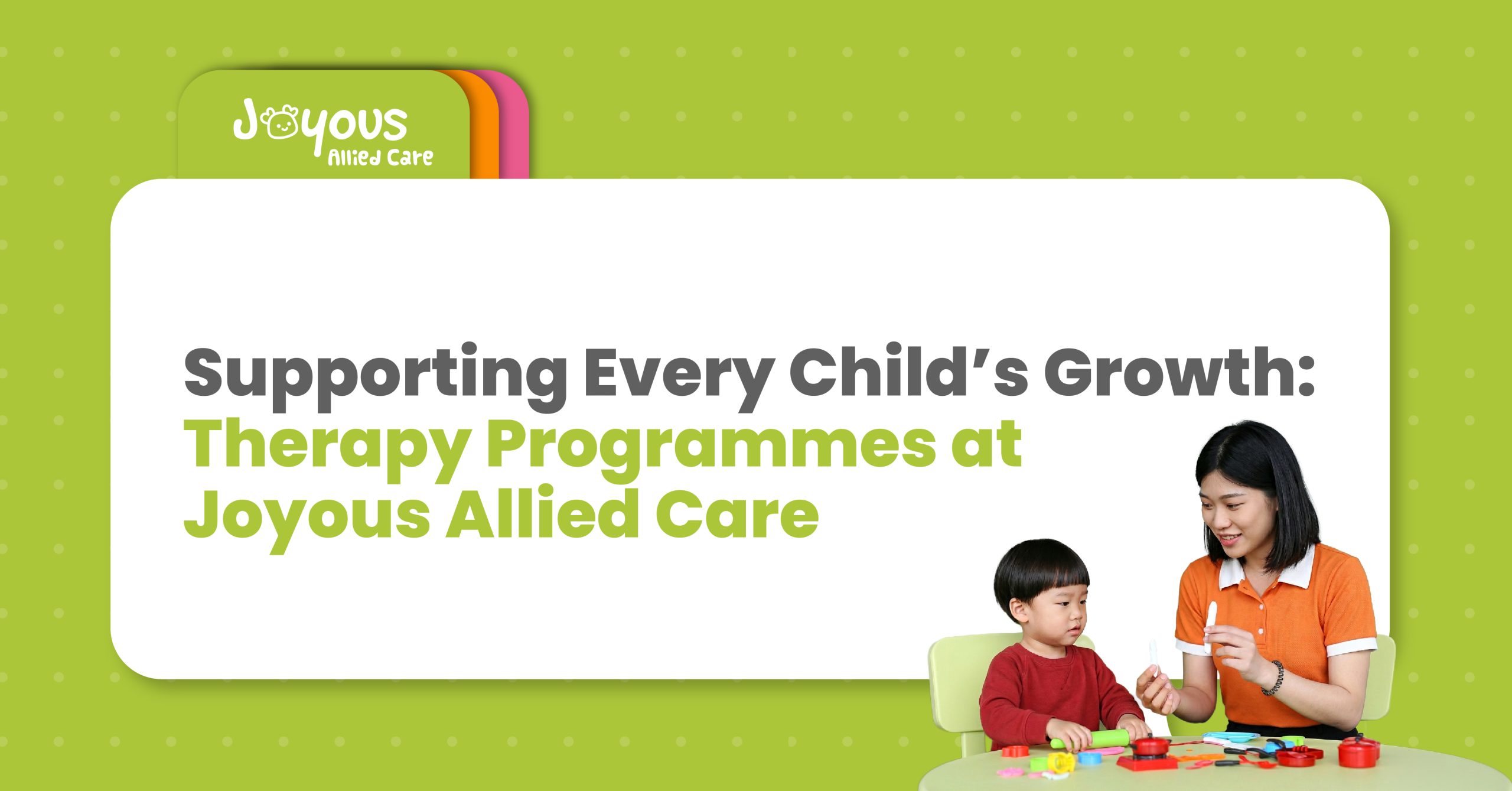
At Joyous Allied Care, we believe that every child grows at their own pace. At certain stages, some children may need a little more guidance and support to move forward with confidence.
Our therapy programmes provide structured, individualised support to help children develop in areas such as communication, motor skills, social interaction, and emotional regulation. These supports are thoughtfully integrated within our inclusive preschool environment, allowing children to better participate, engage, and thrive in their daily learning experiences.
Rather than separating children, we focus on supporting them within real-life learning contexts, so they can build skills that truly carry over into school and everyday life.
Speech Therapy
Building Communication Confidence
What you might notice:
- Your child is not talking yet, or started talking later than peers
- Speech is unclear or difficult to understand
- Has trouble understanding simple instructions
- Finds it hard to express wants and needs
- Gets stuck, repeats sounds, or stutters while speaking
- Struggles to interact, respond, or play with others
- Difficulty chewing, swallowing, or managing oral movements
What it could mean:
Your child may still be developing speech and language skills
It could also be influenced by:
- Limited opportunities for language interaction
- Difficulty forming clear sounds
- Adjusting toa new environmentor routine
What happens during therapy:
Through play-based activities, picture prompts, and guided speech practice, children learn to form sounds, build vocabulary, and express ideas more clearly.
They are gently guided to communicate needs, respond to others, and participate in conversations.
Building clearer speech and growing confidence in communication
Play Therapy
Strengthening Social & Interaction Skills
What you might notice:
- Difficulty adapting to changes in routine or environment
- Challenges interacting with peers or adults
- Limited response when spoken to or engaged
- Difficulty expressing needs or emotions clearly
- Prefers to play alone or seems unsure how to join others
- Behavioural outbursts or frustration when facing demands
What it could mean:
Your child may need support in social communication and connection
It could also be influenced by:
- Feeling overwhelmed in social situations
- Not yet knowing how to engage or respond
- Limited opportunities to practice interaction
What happens during therapy:
Through guided play, role-play scenarios, and interactive games, children learn how to take turns, respond, and engage with others.
In a safe and relaxed environment, they begin to build connection, awareness, and confidence in social situations.
Learning to connect, interact, and engage through play
Occupational Therapy
Developing Everyday Skills
What you might notice:
- Difficulty holding a pencil, using scissors, or completing simple tasks
- Struggles with self-care (e.g., dressing, feeding, hygiene)
- Avoids or finds it hard to participate in hands-on activities
- Trouble with sharing, turn-taking, or group participation
- Gets frustrated easily during tasks or structured play
- Limited hand-eye coordination or fine motor control
What you might notice:
Your child may still be developing fine motor strength and coordination
It could also be influenced by:
- Limited hands-on practice
- Developing hand strength and control
- Lack of structured opportunities to build these skills
What happens during therapy:
Children engage in activities such as threading, sorting, cutting, and hands-on tasks to strengthen coordination and control.
They also practice daily living skills like feeding, dressing, and managing routines, building independence step by step.
Strengthening coordination and building independence in daily life
Clinical Psychology Support
Nurturing Emotional Well-being
What you might notice:
- Sudden changes in behaviour (e.g., more withdrawn, easily frustrated, loses interest)
- Appears more sensitive, anxious, or overwhelmed than usual
- Hesitant or unsure in new environments or situations
- Less engaged in activities they previously enjoyed
- Has difficulty coping with transitions or small challenges
- Strong emotional reactions that seem hard to regulate
What it could mean:
Your child may be experiencing emotional or developmental challenges
It could also be influenced by:
- Changes in environment or routine
- Difficulty coping with new expectations
- Underlying stress or frustration
- Adjusting to life changes or unfamiliar experiences
What happens during therapy:
Through conversation, play, drawing, and guided activities, children are supported in expressing their thoughts and emotions.
They learn to understand their feelings, regulate responses, and build a sense of safety and trust.
Building emotional security, resilience, and confidence
🌱 Early Support Makes a Difference
Not all children who benefit from therapy have a formal diagnosis. In many cases, children are simply at a stage where they need more structured guidance and support.
With early support, children are better able to build foundational skills, participate more confidently, and navigate learning and social environments with ease.
📩 Let’s Support Your Child’s Journey Together
If you’ve noticed your child may need a little more support, it could be helpful to explore the options available.
At Joyous Allied Care, we provide professional assessments and personalised support plans tailored to each child’s needs
Reach out to us to learn more or book a consultation — let’s find the right support for your child together.
If you’d like help, resources, or just a friendly chat, reach out to us at +6010-660-9549 or visit joyous.edu.my. You’re not alone — we’re here for you and your child, every step of the way.
